All learn articlesCarbon standards

Gold Standard for the Global Goals

The standard that asks a carbon project to prove development outcomes as well as tonnes — how it is structured, and what it requires of forestry projects.

Flora Carbon AI··6 min read
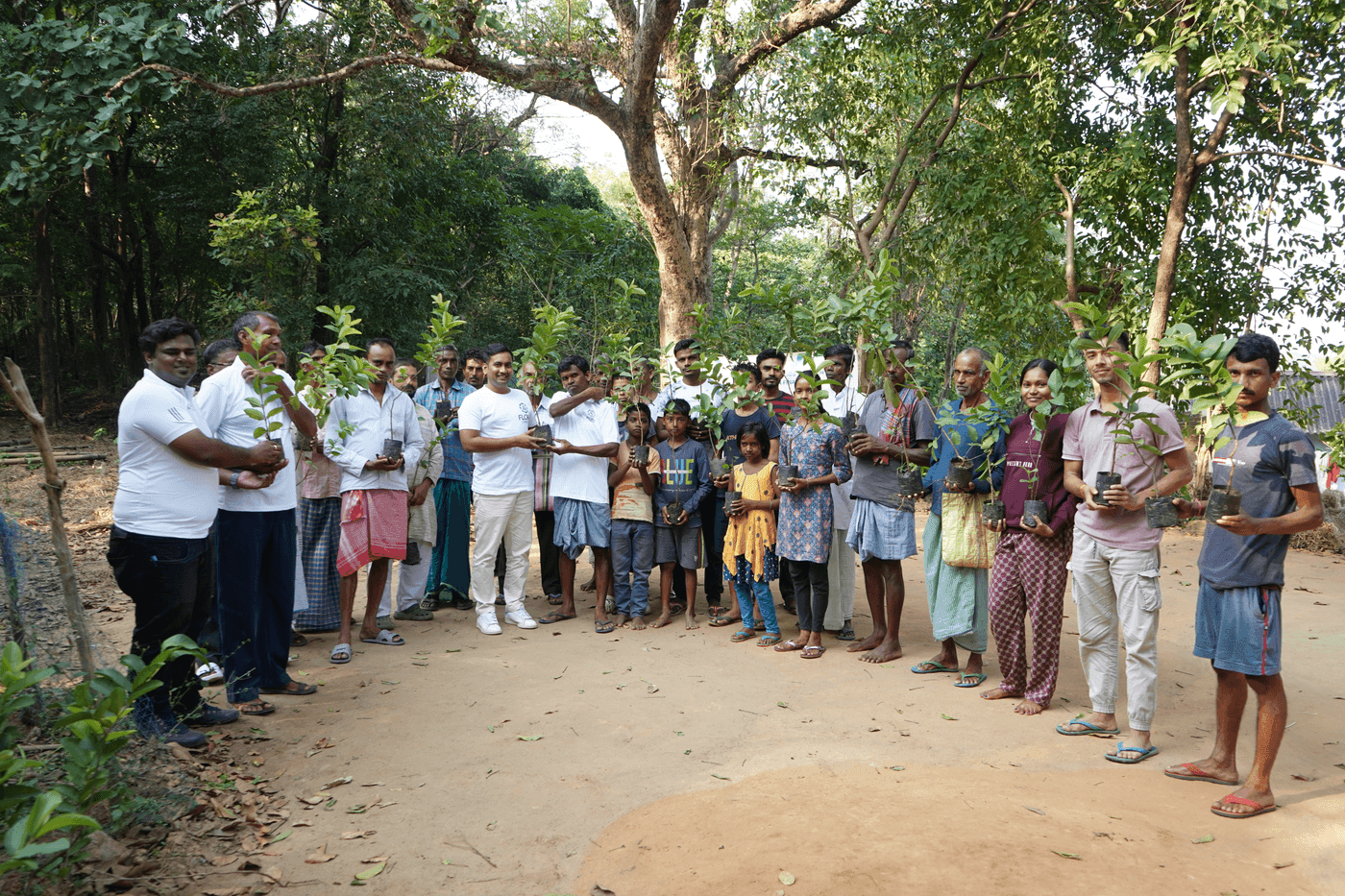
Agroforestry plantation on farmland in India

Gold Standard is a certification body founded in 2003 by WWF and other international non-governmental organisations, whose Gold Standard for the Global Goals framework certifies carbon projects against both greenhouse gas outcomes and contributions to the United Nations Sustainable Development Goals.

Key facts

  • The Gold Standard Foundation was founded in 2003 by WWF and other international non-governmental organisations.
  • Its current framework is Gold Standard for the Global Goals (GS4GG).
  • Certification requires demonstrated contributions to the Sustainable Development Goals, not only greenhouse gas outcomes.
  • Land Use and Forests is the activity category covering afforestation, reforestation and agricultural activities.
  • Eligible afforestation and reforestation land must not have been forest for at least the preceding ten years.
  • At least ten per cent of the project area must be set aside as protected area for biological diversity.
  • Flora Carbon AI's West Bengal agroforestry programme in Purulia district is a Gold Standard grouped project.

What is Gold Standard?

Gold Standard is a certification body founded in 2003 by WWF and other international non-governmental organisations, established to raise the environmental integrity of carbon projects and to make their sustainable development outcomes measurable. Its current framework is Gold Standard for the Global Goals, usually abbreviated GS4GG.

The founding by environmental NGOs rather than by market bodies is the mirror image of the Verified Carbon Standard's origin, and it shows in the requirements. Gold Standard was created out of a concern that carbon projects could deliver tonnes while doing little or nothing for the people living alongside them.

What makes Gold Standard different from other carbon standards?

A Gold Standard project must demonstrate contributions to the United Nations Sustainable Development Goals as well as greenhouse gas outcomes. Certification is not available for climate benefit alone.

In practice this raises the evidence burden in a particular direction: alongside the carbon accounting, a project has to document stakeholder consultation, safeguards and the development outcomes it claims. For smallholder and community forestry work this tends to fit the reality of the project well, because such projects already involve continuous engagement with the people on the land.

What does Gold Standard require of forestry projects?

Land use and forestry activities are governed by the Land Use and Forests Activity Requirements — document 203 in the numbered series catalogued in the Gold Standard document library. Two eligibility rules are worth knowing before a site is chosen, because they cannot be worked around later.

  • Land proposed for afforestation or reforestation must not have been forest for at least the preceding ten years.
  • At least ten per cent of the total project area must be set aside as protected area for protecting or enhancing biological diversity.
  • Eligible activities span silvicultural systems, conservation forests, rotation forestry, agroforestry and silvopasture.
  • Performance risks around non-delivery or reversal of benefits are assessed under the standard's risk framework.

The ten-year rule is a land-eligibility screen, and it is exactly the kind of question that is cheap to answer from satellite imagery before a project commits and expensive to discover during validation. That screening step is part of why land-use history mapping matters — see forest carbon monitoring.

Where does Flora Carbon AI work with Gold Standard?

Flora Carbon AI's agroforestry programme in Purulia district, West Bengal, is a Gold Standard grouped project. A grouped project allows new instances to be added to an existing registered project over time, which suits smallholder aggregation where participants join in successive cohorts.

For what that involves in practice — per-farmer traceability, land screening, and the evidence a verifier will ask for — see digital MRV in India and agroforestry carbon projects. The rules themselves are catalogued in the Gold Standard document library, and the quantification methodologies in the methodology catalogue.

Key terms in this article

Gold Standard for the Global Goals (GS4GG)
Gold Standard's current certification framework, under which projects are certified for greenhouse gas outcomes together with contributions to the Sustainable Development Goals.
Grouped project
A registered project designed so that new instances or participants can be added over time without registering a new project each time.
Sustainable Development Goals (SDGs)
The seventeen United Nations goals adopted in 2015, contributions to which Gold Standard requires a certified project to demonstrate.

Frequently asked questions

When was Gold Standard founded?

The Gold Standard Foundation was founded in 2003 by WWF and other international non-governmental organisations, to raise the environmental integrity of carbon projects and make their sustainable development outcomes measurable.

How is Gold Standard different from Verra?

Gold Standard requires a project to demonstrate contributions to the United Nations Sustainable Development Goals alongside its greenhouse gas outcomes; certification is not available for climate benefit alone. It was founded by environmental NGOs, where the Verified Carbon Standard was founded by market and business bodies.

What land is eligible for Gold Standard afforestation projects?

Land that has not been forest for at least the preceding ten years. In addition, at least ten per cent of the total project area must be set aside as protected area for protecting or enhancing biological diversity.

What is a Gold Standard grouped project?

A registered project structured so that new instances or participants can be added over time without registering a new project each time. It suits smallholder aggregation, where farmers join in successive cohorts.

Sources

The regulatory facts in this article trace to the following primary sources. Scheme rules, methodologies and procedures continue to evolve, so check the current text before relying on any of it for a project decision.

  1. Gold Standard — organisation site

    The Gold Standard Foundation's own description of its certification and its history.

    Link checked

  2. Gold Standard for the Global Goals — Activity Requirements

    Index of the activity-specific requirements, including Land Use and Forests.

    Link checked

  3. Gold Standard for the Global Goals — Land Use and Forests Activity Requirements

    The requirements document for land use and forestry activities. Gold Standard retains copyright; this page describes it and links to it rather than reproducing it.

    Link checked

  4. Gold Standard — 403 Afforestation/Reforestation GHG Emissions Reduction and Sequestration Methodology, v2.1

    The A/R methodology page on Gold Standard's own site.

    Link checked

Published by Flora Carbon AI · August 20, 2026

Next step

Scoping a carbon project in India?

Flora Carbon AI builds the measurement and verification evidence a carbon project needs, from land screening to registry-ready reporting.