What does it take to turn Alternate Wetting and Drying into carbon credits?
Creating carbon credits involves more than putting a climate solution into practice; it is about demonstrating that the approach produces quantifiable, verifiable climate benefits. Alternate Wetting and Drying (AWD) is a promising water-management practice in rice cultivation. It involves periodically draining rice fields instead of keeping them continuously flooded, which can reduce methane emissions while conserving irrigation water. Converting that field-level intervention into validated credits, however, calls for trustworthy information, defensible methods, consistent documentation and proof that can stand up to independent examination.
The first credits issued under Verra's VM0051 approach for lowering methane emissions from rice farming are a helpful case study. Core CarbonX's project generated 211,403 carbon credits for 20,602 farmers, but it took more than four years from project creation to credit issuance, with 47 findings identified during validation, verification and Verra's approval procedure. The milestone shows the potential of rice methane projects. The process behind it raises an important question: how can developers reduce the time between implementation and credit issuance?
Why did it take four years from field implementation to credits?
Carbon projects pass through several stages before credits can be issued: project design, validation, monitoring, verification and registry review. For this project the timeline shows how demanding that can be.
| Stage | Approximate duration | Findings |
|---|---|---|
| Validation | 2 years 4 months | 13 |
| Verification and Verra review | 15.5 months | 34 (22 from the verification auditor, 12 from Verra) |
| Total | More than 4 years | 47 |
Validation determines whether the project design meets the applicable methodology and registry standards, examining the baseline scenario, project boundaries, additionality, monitoring procedures and the method for estimating emission reductions. Verification evaluates the monitored results and the evidence behind the claimed reductions, and the registry review adds another layer of scrutiny. The findings should not be read as direct evidence of poor project performance: they reflect the questions and clarifications that emerged during assessment. But their volume, and the time they take, point to the importance of preparing documentation and evidence for review from the outset.
Why is resolving audit findings so slow?
A finding may look like a small documentation issue, but fixing it can be a lot of work. An auditor may ask for clarification of a baseline assumption, evidence of farmer participation, correction of a calculation, or consistency between the project description and the monitoring report. Every response must be backed by evidence. If information is incomplete or inconsistent between documents, the team may have to recalculate, search out original records or update several parts of its documentation.
The result is a cycle of questions, answers, revision and re-evaluation. When issues are identified late, even simple corrections can lead to delays.
Why is methane so hard to demonstrate?
Methane emissions vary with water-management practices, soil conditions, temperature and other factors, so demonstrating reductions depends on a scientifically defensible methodology and reliable evidence of the conditions under which the project operates. Methane was not directly measured in the project described here. That does not in itself mean the claimed reductions are not valid: carbon methodologies can estimate reductions using approved approaches, activity data and prescribed emission factors.
But when direct measurements are unavailable, the assumptions, calculations, field records and monitoring procedures used to estimate reductions become particularly important. The main challenge is not simply collecting data; it is demonstrating that the data and assumptions give a credible basis for quantifying emission reductions.
What are the three lessons for AWD carbon project developers?
This project offers three practical lessons for developers working on rice methane projects and other agriculture-based carbon initiatives.
- Build audit readiness into project design. Audit preparation should not start when the auditor arrives. Planning how to collect data, maintain records and check for errors early avoids missing information and makes validation and verification smoother.
- Make every number traceable. A monitoring report is only as good as the data behind it. Farmer records, field activities, water-management practices, baseline assumptions and emission calculations need to be documented and linked, so that when a reviewer asks, the team can show where the data came from, how the calculations were done and how the result was reached.
- Identify weaknesses before independent review. Regular internal checks can catch missing documents, inconsistent data, calculation errors and methodology gaps before they become findings. No one can predict every auditor question, but reviewing the project in advance reduces back-and-forth.
The goal is not to avoid scrutiny, but to make sure the project is well prepared for it.
How do you bridge the gap between field data and audit-ready credits?
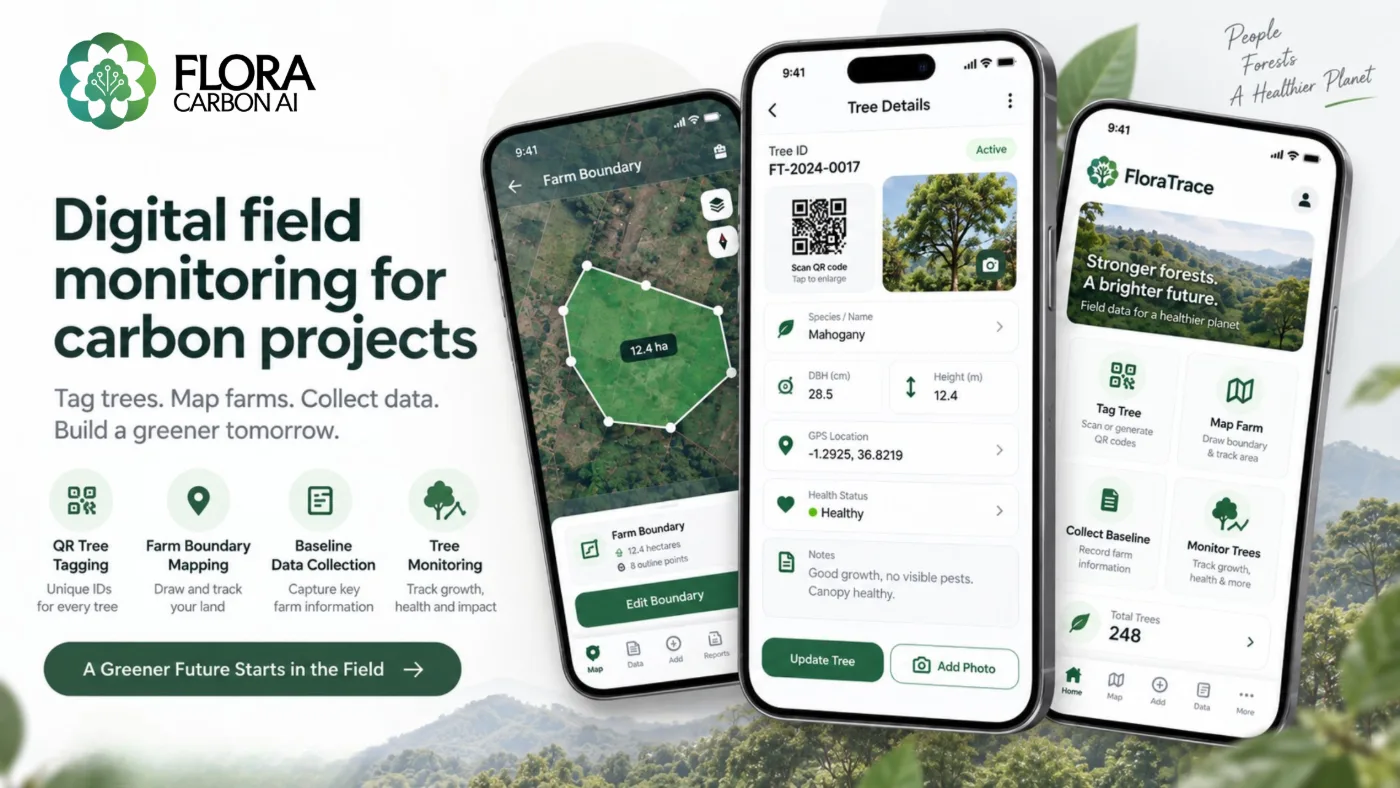
At Flora Carbon AI, we help carbon project developers bridge the gap between field implementation and audit-ready documentation. Through digital tools and project support, we help teams organise project data, strengthen documentation and identify potential gaps before formal assessments, from satellite-based analysis and monitoring reports to pre-audit checks. Audit readiness means every important claim is backed by clear, traceable evidence: well-organised records, consistent calculations and documented assumptions help auditors review projects more efficiently and reduce avoidable rework for developers.
Digital tools cannot eliminate every audit finding or guarantee approval, but they can make the assessment process more structured and transparent. We believe the work behind a carbon credit should be as credible as the credit itself. See how FloraTrace and our other modules support traceable evidence on the products page.
Is generating credits the same as issuing them?
The first credits issued under VM0051 demonstrate the potential of rice methane reduction projects to support climate action at scale. They also reinforce a broader lesson: successful project implementation and successful credit issuance are connected, but they are not the same thing. Between the two lies the work of documenting activities, validating assumptions, managing data, responding to independent scrutiny and demonstrating measurable climate benefits.
Improving that process is essential to making projects more efficient and scalable without compromising environmental integrity. Better data systems, structured documentation and early quality checks can help close the gap between field implementation and audit-ready credits. If you want to make your project more audit-ready, book a demo or get in touch.